How cargo moves
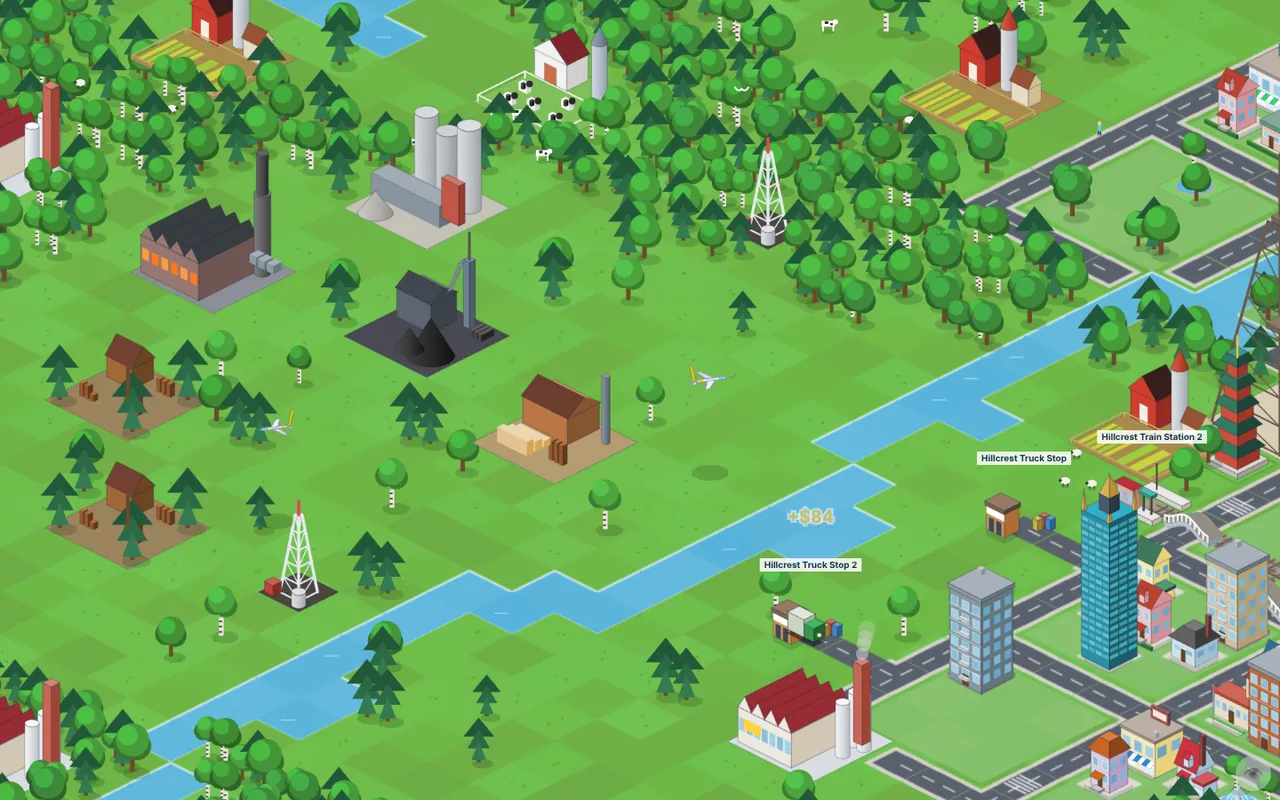
An industry only ships cargo through a station within about 4 tiles of its centre. Truck stops and train stations can carry freight. Bus stops and airports cannot. Ports carry both.
- Primary industries such as farms, mines and wells produce cargo all the time. If no station is in range, a small stockpile builds up and waits.
- Secondary industries such as the food plant, sawmill and steel mill turn delivered cargo into a more valuable product, which they hand to their own nearby stations.
- Towns with at least 60 people accept food, goods, planks, cement and fuel at any station in their catchment.
The station preview card lists what a station would accept and what it can pick up before you place it, so you can check you are in range.
Every chain in the game
| Produces | Delivered to | Makes | Unlocks at |
|---|---|---|---|
| Farm (grain) + Dairy Ranch (milk) | Food Plant | Food, accepted by towns | Level 1–3 |
| Lumber Camp (logs) | Sawmill | Planks | Level 2–3 |
| Coal Mine (coal) | Power Plant | Power: +8% passengers in nearby towns | Level 4–5 |
| Iron Mine (iron ore) | Steel Mill | Steel | Level 5–7 |
| Quarry (stone) | Cement Plant | Cement | Level 6–7 |
| Oil Well (oil) | Refinery | Fuel | Level 8–9 |
| Steel + Planks | Factory | Goods, the most valuable cargo | Level 10 |
The map already has industries scattered around, some on your land and many beyond it. You can also build your own from the Industry tab once you own the land.
What each cargo is worth
Each cargo has a value multiplier applied to the distance-based fare. From lowest to highest: stone (1.0), logs (1.05), grain (1.1), coal (1.25), milk and iron ore (1.3), oil (1.5), cement (1.7), planks (1.8), food (2.0), steel (2.2), fuel (2.4) and goods (3.0). Processing a raw material and shipping the product roughly doubles what the same tonnage earns.
Trucks or trains?
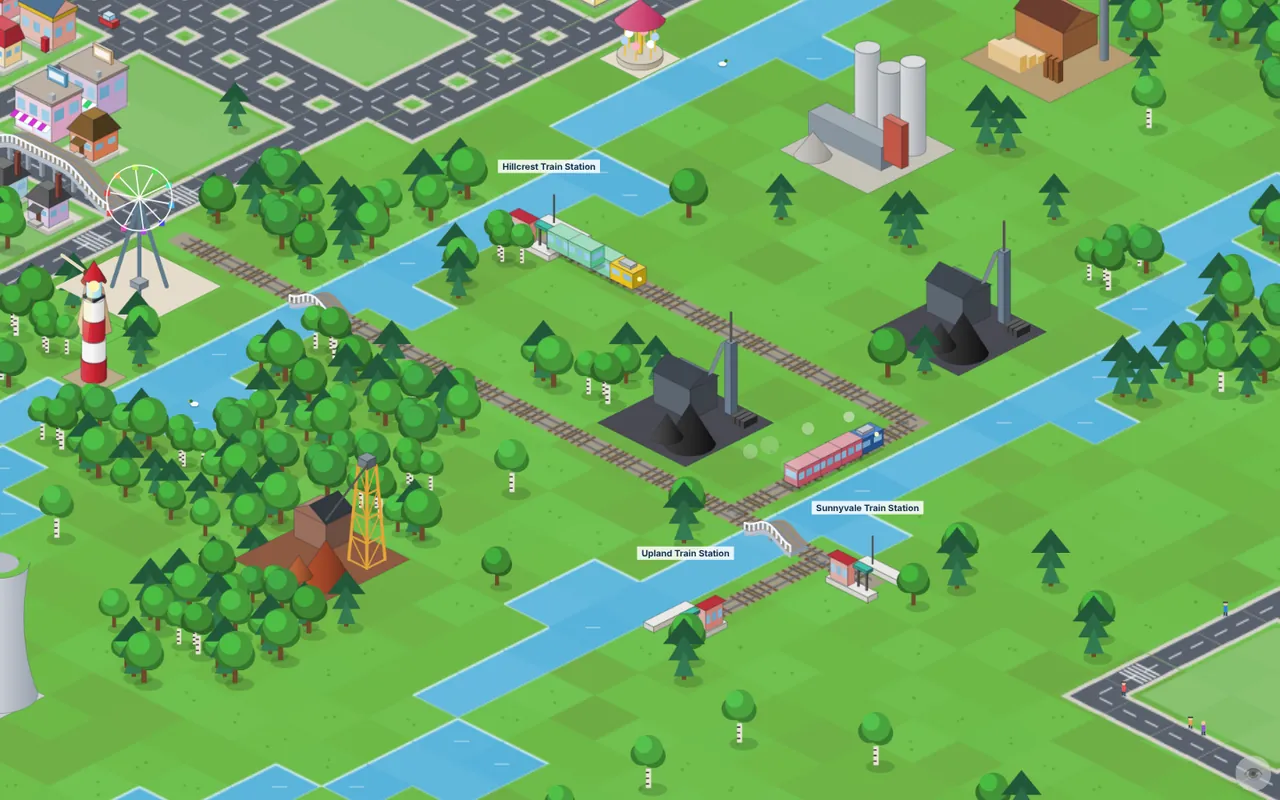
Trucks are cheap and need only roads, so they suit short hops between an industry and the next processor. A Pickup carries 20 tonnes. The top Mega Hauler carries 150. Trains cost more and need their own track, but even the Steam Engine carries 50 tonnes and 60 passengers, and the Maglev carries 340 tonnes. Rail also earns 15% more per unit than road. Use trucks to get a chain started, and switch to rail once the distances grow.
A good first chain
- Find a farm and a food plant on land you own, or buy the parcels next to your territory.
- Place a truck stop on a road tile within 4 tiles of the farm and another next to the food plant.
- Join them with a road and buy two Pickups.
- Put a third truck stop near the food plant's output and run food to the nearest large town.
Each link in that chain earns on its own, and the food delivery feeds a town that then needs more buses. That loop is how most companies take off.
Orders from your neighbours
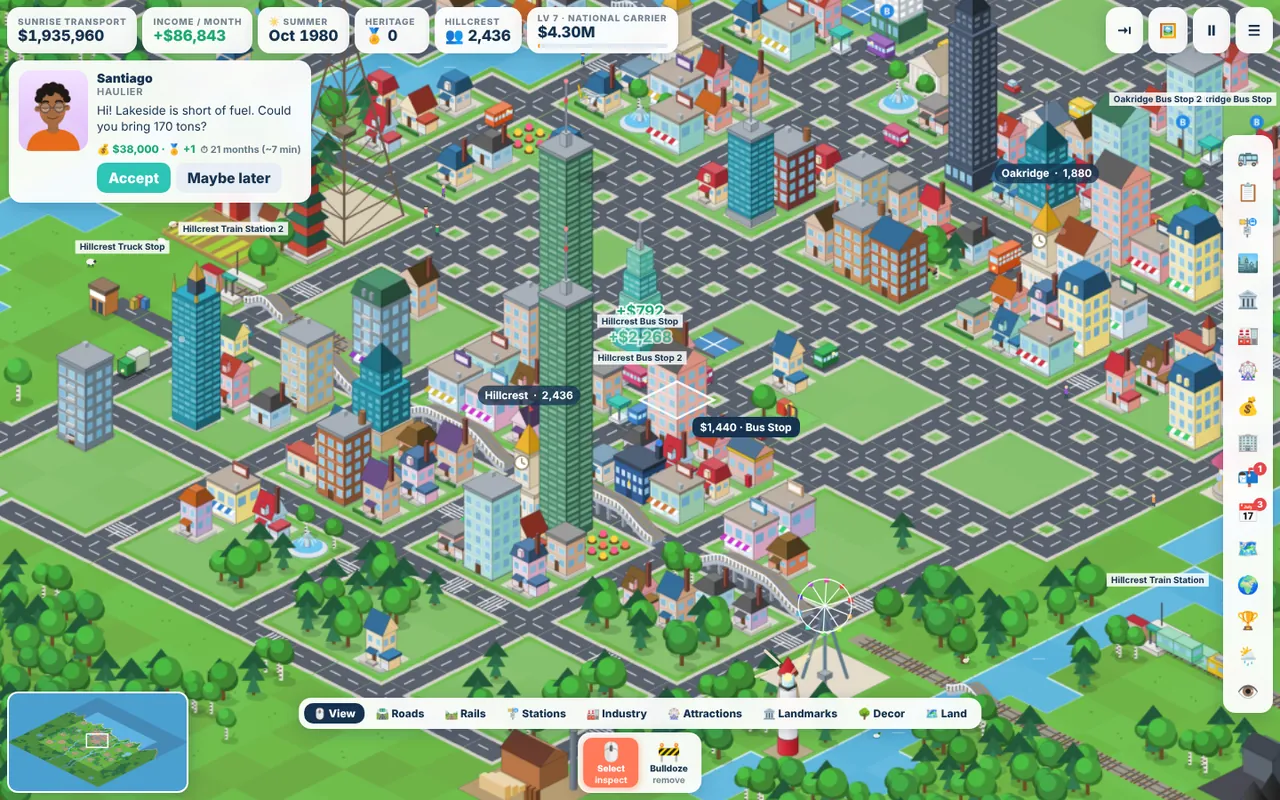
Every so often a neighbour rings the doorbell: a farmer, a shopkeeper, a mayor or a site manager, each with a request such as "bring 170 tonnes of fuel to Lakeside". Accept it and you have 14–22 game months to deliver. Rewards are paid in cash and sometimes include a Heritage Point. You only get requests for towns and industries on your land, so every order is one you can actually fulfil.
Ready to try it? The game runs in your browser on a laptop or PC, and it is free.
Play Browser City TycoonNext guide: Every vehicle compared